
Define the lot
Confirm the shipment quantity, product scope, inspection type and whether the lot is ready for sampling.
AQL is the standard sampling logic used in many product inspections. Instead of checking every unit, the inspector checks a statistically defined sample from the production lot. The lot is accepted or rejected based on the number and severity of defects found in that sample.
Mega Step uses AQL as a decision framework for pre-shipment inspections, during-production checks and loading checks when the customer wants clear pass, fail or pending criteria before goods leave the factory.
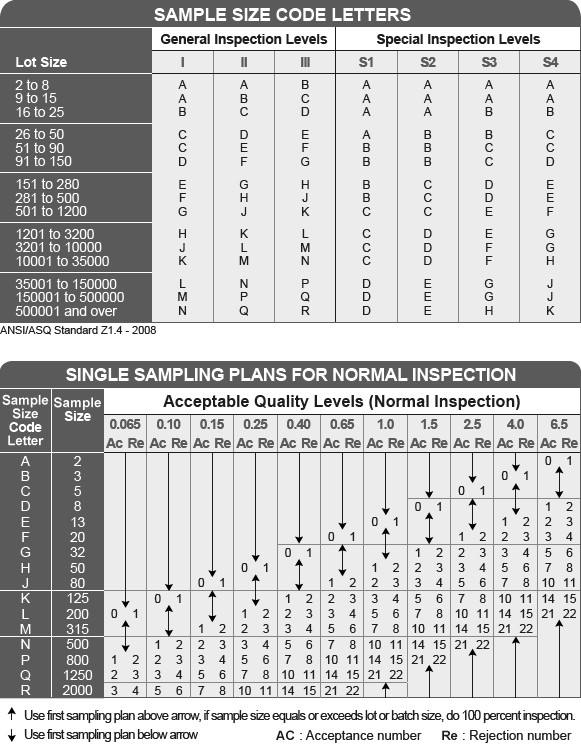
AQL tables use two steps: first use the lot size and inspection level to find a sample size code letter, then use that code letter with the agreed AQL value to find the sample size, acceptance number (Ac) and rejection number (Re). If defects reach the rejection number, the lot fails under that defect class.
Confirm the shipment quantity, product scope, inspection type and whether the lot is ready for sampling.
For most consumer goods, General Inspection Level II is the normal starting point. Level I lowers sample size; Level III increases it.
The lot size and inspection level lead to a letter code in the AQL table. That code defines how many units are checked.
The agreed AQL values for critical, major and minor defects define the acceptance and rejection numbers.
Mega Step records checked quantity, defect class, AQL result, photos and comments in the inspection report.
For a lot between 3,201 and 10,000 pcs under General Inspection Level II, the sample size code is typically L. Under normal inspection this means 200 units are drawn randomly from the lot. If the agreed major-defect AQL is 2.5, the lot is accepted with 10 or fewer major defects and rejected at 11 major defects.
This does not mean the full shipment has only ten defects. It means the sample result is within or outside the agreed statistical tolerance for that lot.
Safety, legal compliance, sharp edges, fire risk, wrong warning labels or failures that make the product unsafe.
Defects likely to affect saleability, function, assembly, appearance expectations or customer acceptance.
Workmanship or cosmetic issues that do not normally prevent use but exceed agreed quality expectations when repeated.
AQL gives procurement and quality teams a consistent sampling method. It is useful when full inspection is too slow, too expensive or not required, and when the buyer needs a documented pass/fail decision based on agreed defect limits.
AQL is not a guarantee that every unit in the shipment is defect-free. It is a risk-based sampling method. High-risk products, safety-critical requirements, regulatory checks or repeated supplier problems may require tighter levels, special checks, lab testing or 100% inspection.
In a Mega Step inspection report, the AQL setup is connected to the inspected quantity, sample size, defect list, photo evidence and final conclusion. When Qarma online reporting is used, customers can review the AQL result together with checklist answers and defect photos.
Reference basis: QualityInspection.org AQL explanation and standard ISO 2859-1 / ANSI Z1.4 sampling practice.